The Concept
What ORH explores
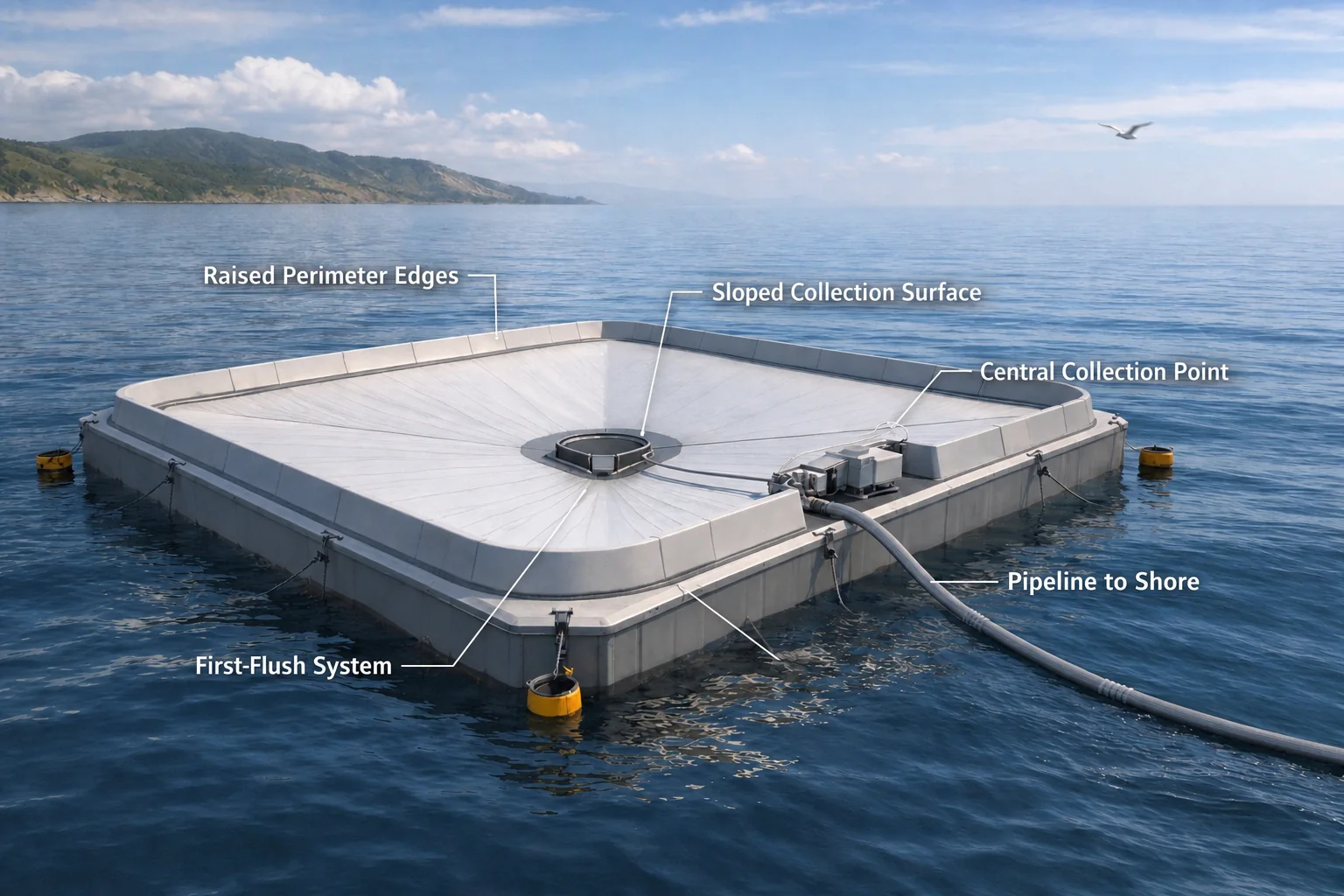
ORH examines whether rainfall in the near-shore offshore zone can be collected using floating or fixed surfaces. Rainfall lands on a gently sloped platform, drains toward a central point, and is transferred to shore through a low-pressure line. The system operates passively, using only natural rainfall and gravity, which keeps the concept intentionally simple and low-energy.
- 01
Offshore rainfall reaches the collection surface.
- 02
A gently sloped platform directs the water inward.
- 03
Water reaches a central collection point.
- 04
A low-pressure line transfers it to shore.
Coastal meteorology
Why offshore rainfall is different
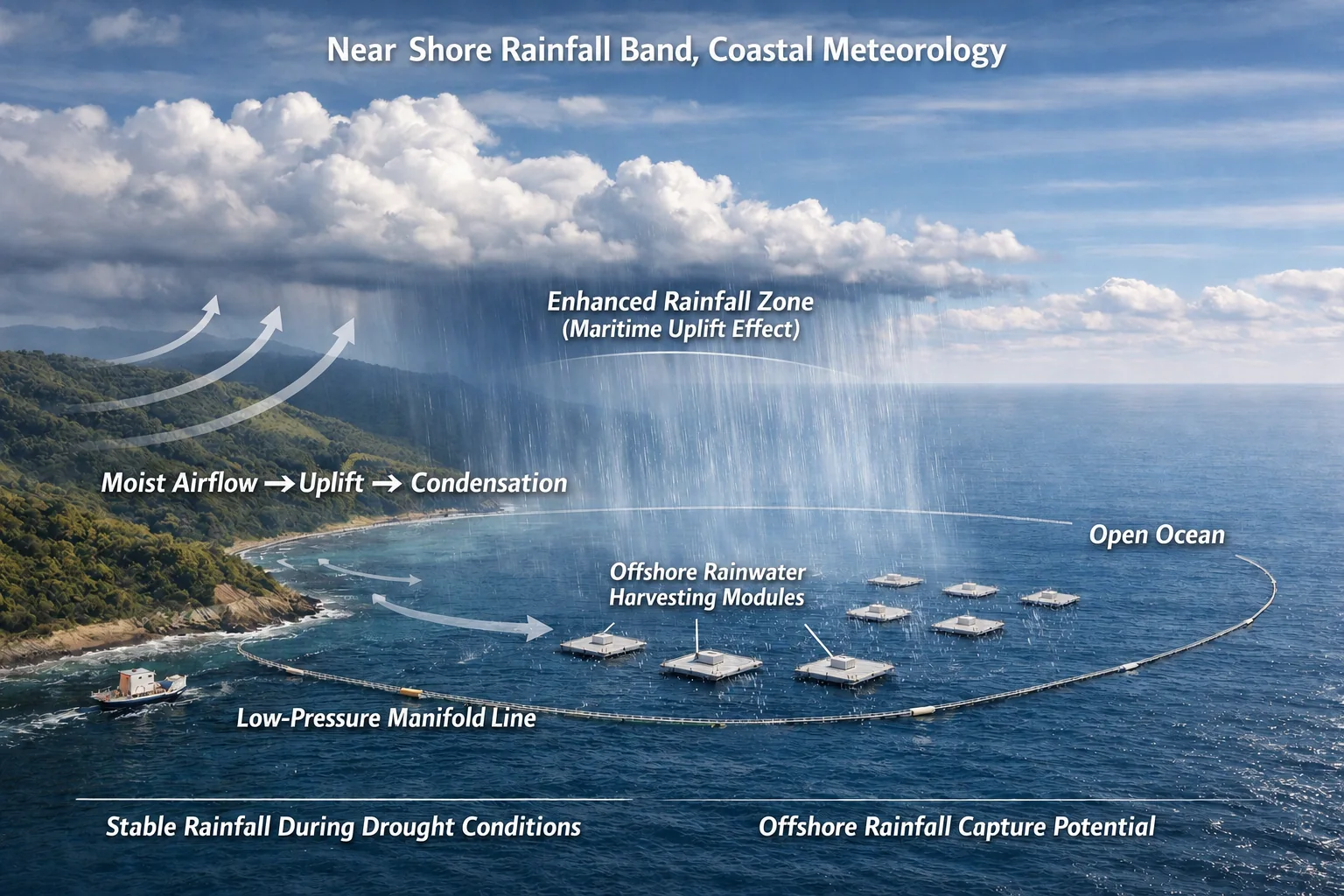
Around three-quarters of the world’s annual precipitation falls offshore. This rainfall is clean at the point of capture and shaped by coastal meteorology. ORH focuses on the first few kilometres from the coastline, where land-sea interactions create unique precipitation patterns that may offer practical opportunities for decentralised collection.
System role
A complementary source
ORH is not intended to replace existing water infrastructure. Instead, it offers a supplementary, nature-based option, particularly in regions where freshwater availability is limited or variable, or where industries seek resilient, low-energy water sources.